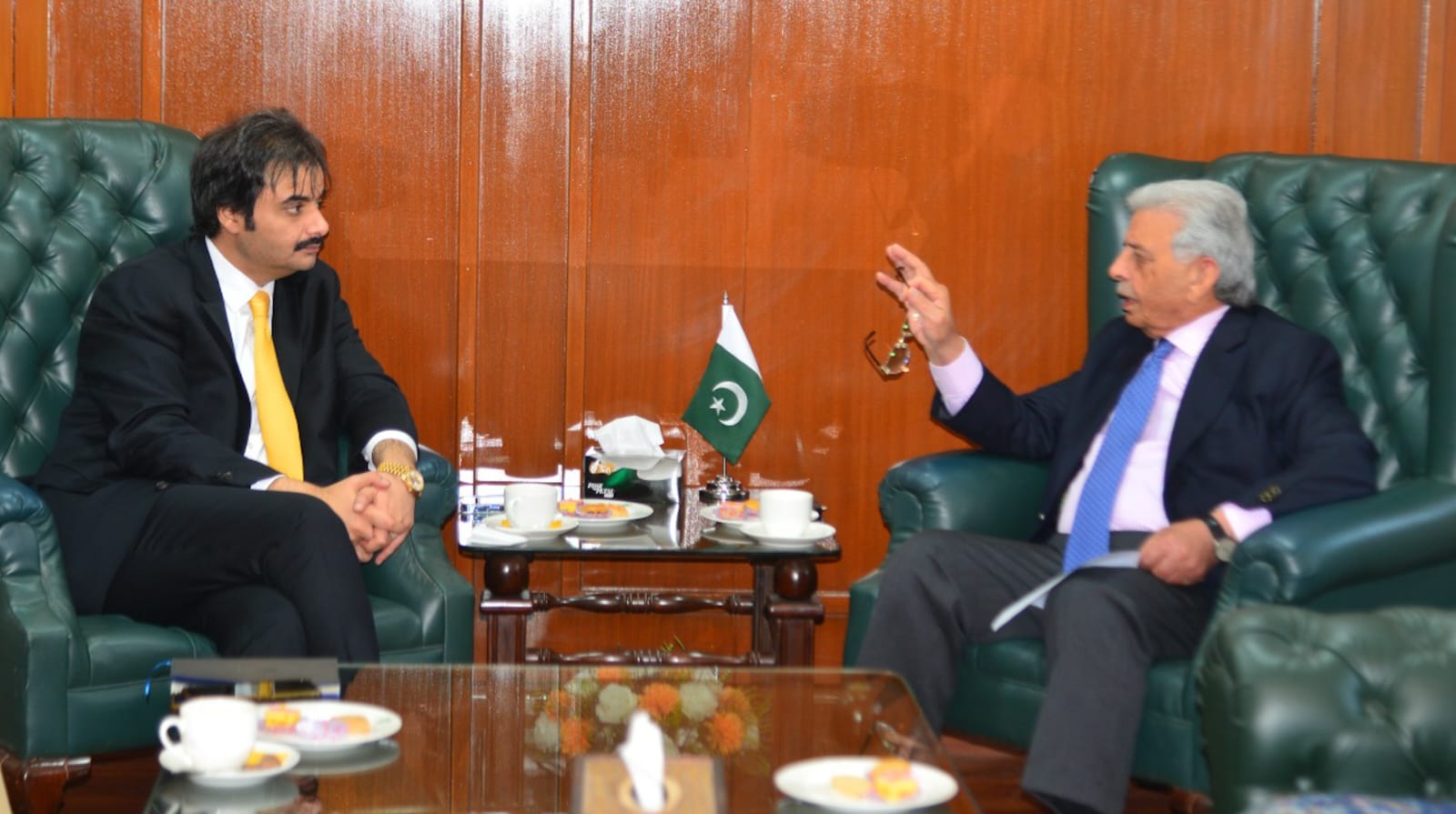
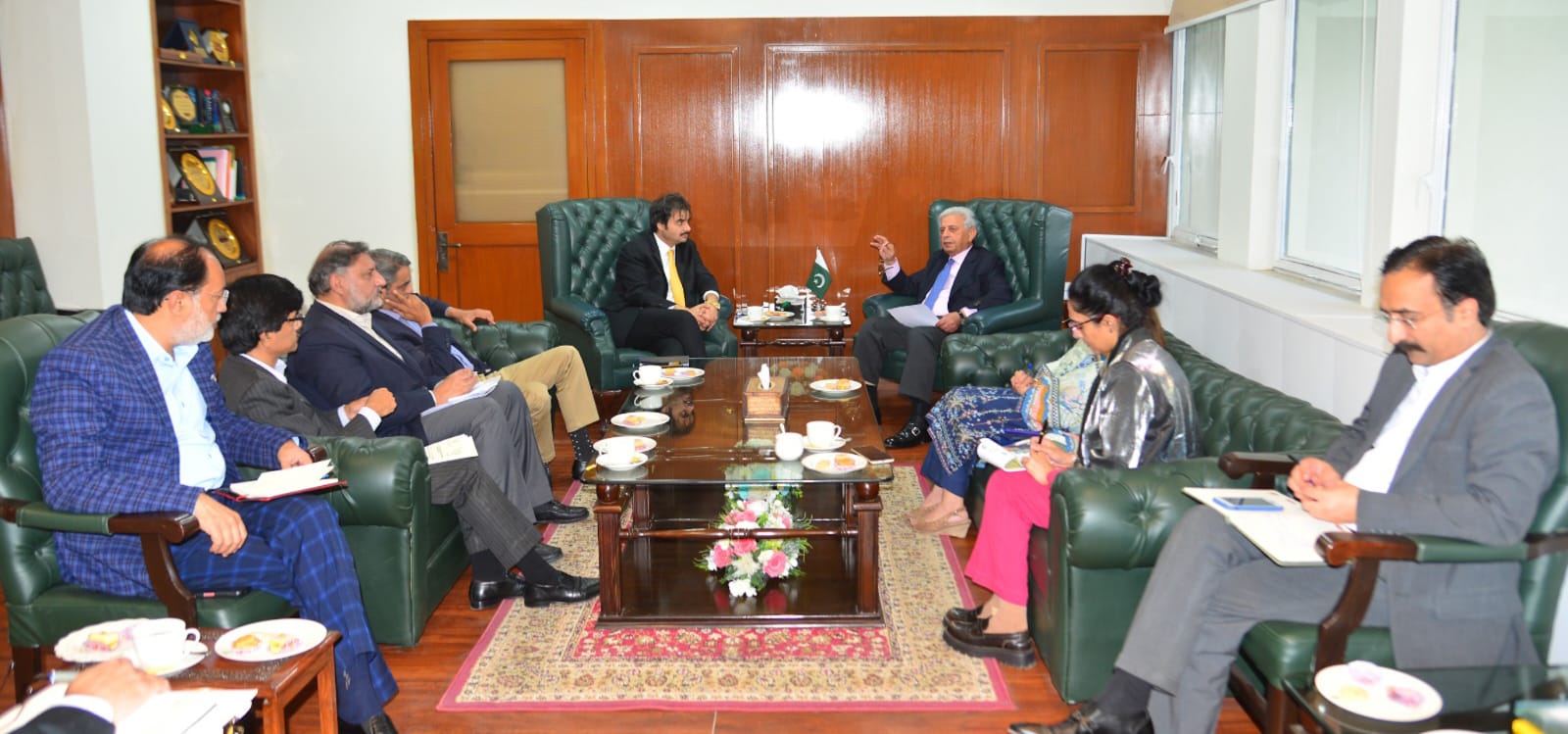
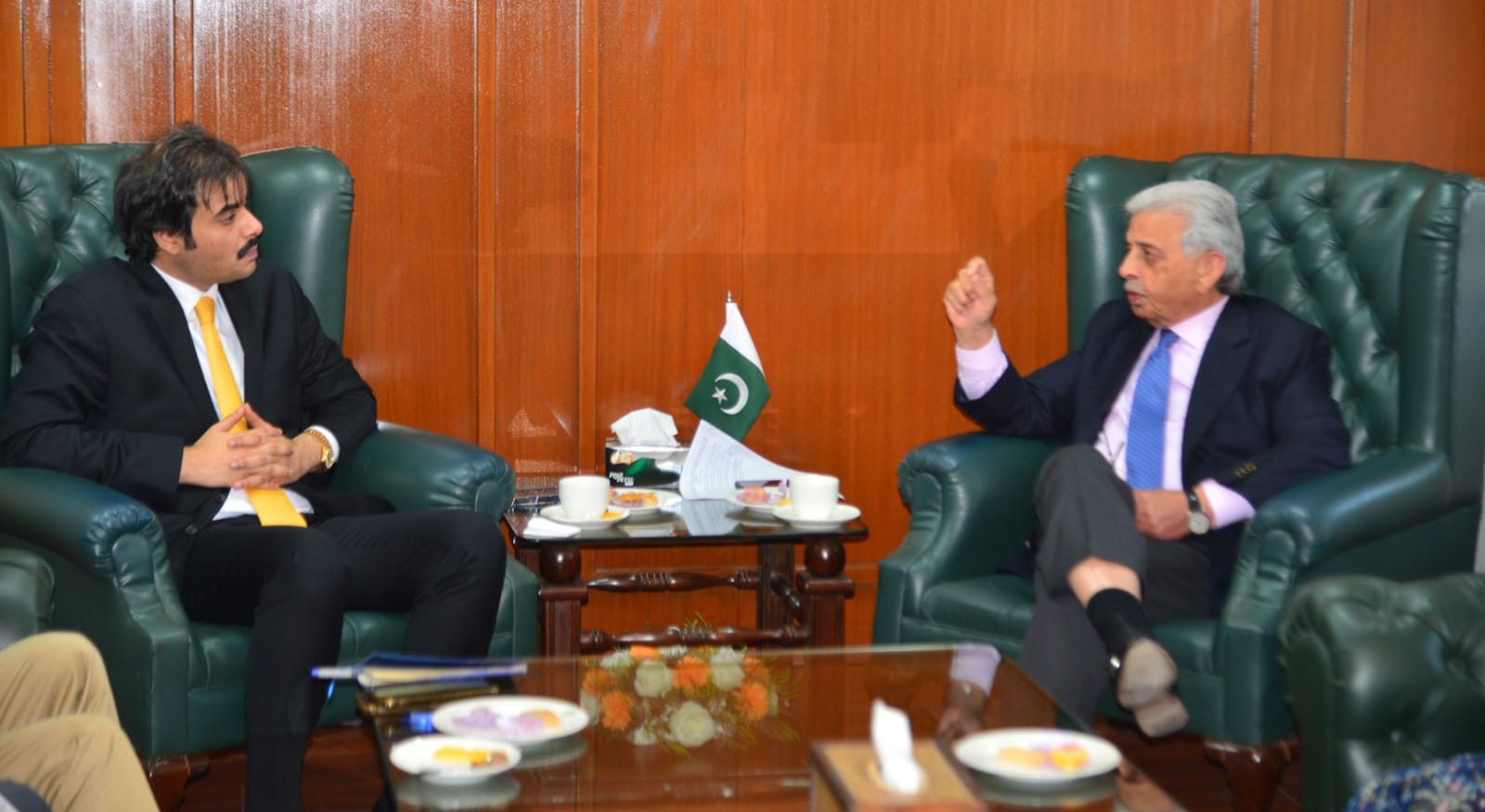
Federal Minister for National Food Security & Research, Rana Tanveer Hussain, meets the President of LCCI to discuss agricultural exports, investment and private-sector collaboration - Islamabad, November 3, 2026
.jpeg)
Government of Pakistan Rana Tanveer Hussain, LCCI President Discuss Roadmap for Boosting Agricultural Exports Islamabad, November 3, 2026: Federal Minister for National Food Security & Research, Rana Tanveer Hussain, held a meeting with the President of the Lahore Chamber of Commerce & Industry (LCCI) to discuss strengthening cooperation between the Ministry and the private sector for enhancing Pakistan’s agricultural exports, promoting investment, improving value addition and addressing regulatory and technical barriers affecting access to international markets. During the meeting, the Federal Minister highlighted that the Prime Minister has placed strong emphasis on increasing the country's exports, underscoring the need for coordinated efforts between government institutions and the business community to unlock Pakistan's agricultural export potential. The LCCI President expressed willingness to work closely with the Ministry and proposed the establishment of an Agriculture Committee within the Chamber to facilitate structured engagement on export-oriented agricultural commodities, particularly rice, livestock and other potential sectors. The Chamber also expressed interest in supporting investment in agricultural research and development. The Federal Minister highlighted Pakistan's considerable export potential in commodities such as rice, potatoes and maize, while sesame, castor bean oil and dates were also identified as products offering opportunities for further development. The meeting emphasized identifying available agricultural surpluses and connecting them with suitable international markets. China, Saudi Arabia and Iran were highlighted as important markets requiring focused engagement and market-specific strategies. The participants stressed that exporters should receive effective facilitation to translate available production surpluses into actual export opportunities. The issue of Foot-and-Mouth Disease (FMD) was discussed as a major constraint affecting Pakistan's meat exports and access to international markets. The Federal Minister emphasized the importance of effective disease-free zoning, compartmentalization, vaccination, animal identification and traceability systems. He stressed that achieving internationally acceptable disease-control and certification standards requires close coordination between federal and provincial governments. The meeting noted that inadequate FMD certification and traceability arrangements continue to restrict access to certain international meat markets. The Minister also highlighted the Ministry's efforts to strengthen testing and certification capacity at the National Agricultural Research Centre (NARC) in accordance with international and European standards. Improved laboratory facilities and credible certification systems are essential to ensure that Pakistani agricultural and food products, including rice and meat, comply with importing countries' technical and quality requirements. The participants agreed that internationally recognized testing and certification would play a critical role in expanding Pakistan's agricultural exports. The meeting also reviewed the establishment of the National Seed Development and Regulatory Authority (NSDRA) and ongoing initiatives to improve seed varieties, strengthen seed quality and enhance agricultural regulatory processes. The Minister emphasized the importance of developing an export-oriented regulatory framework, noting that certification and registration requirements should facilitate rather than unnecessarily restrict the export of agricultural inputs, including seeds and pesticides. Greater investment in agricultural research and development was identified as another priority. The meeting discussed continued collaboration between the Pakistan Agricultural Research Council (PARC) and the Chinese Academy of Agricultural Sciences (CAAS) to strengthen research cooperation and promote the adoption of modern agricultural technologies. The revival of Pakistan's cotton sector was also highlighted, particularly through access to improved seed varieties, international genetics and hybrid technologies aimed at enhancing crop productivity. The Federal Minister reaffirmed that fertilizer availability had been ensured and that the Ministry was making continued efforts to maintain price stability and uninterrupted supply to farmers. Emphasizing the importance of moving beyond the export of raw agricultural commodities, the Minister highlighted the need to promote processing, packaging and value addition. Greater participation of small and medium-sized enterprises and micro-enterprises was considered essential for generating employment, diversifying exports and capturing greater economic value from Pakistan's agricultural production. Dates and olive products were specifically discussed as sectors offering considerable potential for value addition and expanded market opportunities. The meeting concluded with a shared understanding of the need for a coordinated MNFSR–LCCI approach to agricultural export promotion, combining government facilitation, private-sector expertise, agricultural research, internationally recognized testing and certification, value addition and targeted international market development. The proposed Agriculture Committee at LCCI was viewed as a potential platform for identifying exportable commodities, addressing business and regulatory bottlenecks, encouraging private investment and developing commodity-specific strategies to strengthen Pakistan's position in international agricultural markets.
Ministry of National Food security and Research